Ringnecks and Asiatic parrots are not picky eaters. Most ringnecks and Asiatic parrots will eagerly devour fruits and vegetables if they are given the chance. Only a few selected birds might refuse to eat alternative foods other than seeds. In my experience, if I ever did come across an Indian Ringneck who chose not to eat pellets, fruits, or vegetables–they were easily converted to a healthy diet in weeks. Asiatic parrots in particular seem to be birds that really enjoy trying different foods. My Indian Ringnecks have such an appetite that anything that is placed into their cage is quickly eaten up.
The Diet Of A Wild Ringneck
Wild ringnecks eat many things in their natural surroundings. These parrots enjoy fruits, blossoms, and seeds. Because of their need to eat fresh fruits many farmers around the world regard ringnecks as a serious pest. For example, it’s not uncommon for south east Asian farmers to complain about these birds. More recently many farmers located in Bakersfield, California are starting to complain about crop damage due to feral ringnecks. There, they are said to feed off orchards and damage the fruits before they can be picked. A majority of these feral ringnecks are also supported and fed by enthusiasts by backyard birdfeeders.
In the wild these birds seek fresh samplings that can easily be devoured. If none are present, many will resort to dandelion leaves on the ground. Some ringnecks dine on an occasional insects for protein. These birds eat a variety of foods and noting is off limits if it’s edible.
The Diet Of A Captive Ringneck
Feeding your ringneck does not need to be complicated. In fact, feeding them is quite enjoyable. These birds need a variety of fresh fruits, vegetables, seeds, and pellets to enjoy a long life.
Many ringneck owners will only provide seeds while others only provide pellets. I believe doing so limits the optimal nutritional value. Ringneck were designed to eat a variety of foods and providing only one type of food is boring, unnatural, and could cause major health problems down the road. Many owners swear by one product while others dismiss products. Finding a food can get complicated and it can be overwhelming if you don’t know what to feed your ringneck. I like to keep things simple and feed a variety of everything.
When I first started breeding my Indian Ringnecks I was told never to use pellets that were artificially dyed. I can’t disagree with this statement more. I have been using a particular brand for a while and I have never run into problems with my bird’s health. I find this information to be misleading and no scientific evidence has been published to prove these accusations. My ringnecks are healthy and active and I attribute this to their diet. So finding a what works for you and your birds is the best answer here.
Seeds
Seeds should be included in a healthy Asiatic parrot diet. Seeds should not be removed because these birds naturally eat seeds in the wild. Breeders insisted that seeds were bad for their birds because many of the parrots that only ate seeds developed problems. Seeds alone are fatty and can cause serious complications and shorten the lifespan of your Asiatic parrot drastically. If however, they are given in moderation then they are perfectly safe and healthy.
Mixing Seeds & Pellets Together
I would not advise mixing pellets and seeds together. Indian Ringnecks are smart and will easily avoid eating the pellets if possible. It is much better to rotate between the two. I keep the seeds in for four days and the pellets in for three days. This gives my ringnecks the opportunity to really eat and benefit from each food. Giving only pellets can cause a nutrient overdose; giving pellets in moderation will avoid this. The key is moderation and substitution here.
Please note, if your ringneck does not eat pellets, then you have to slowly introduce them into the diet before they are switched with seeds. The ringneck will starve itself if it has not learned to eat pellets.
Fruits & Vegetables

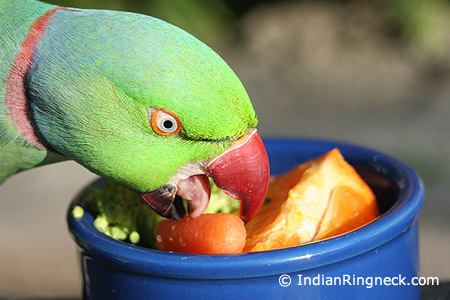
Fruits need to be added to your Indian Ringneck’s diet as well. Apples are probably one of their favorite fruits. Watching them eat their apples is fascinating and it is obvious they enjoy the taste of it. They eagerly drink the juice and chew the flesh into a pulp. It is amazing how quickly a slice will disappear. Grapes also seem to be a favorite and are enjoyed. Be sure to include all kinds of fruits such as oranges, kiwis, pears, mangos, and melons. Spoiled or old fruit should never be given to your parrot. Fruits provide antioxidants and are very healthy.
Though fruit is probably their first choice of fresh foods, vegetables need to be included into their diet as well. I give my Indian Ringneck raw baby carrots. Archimedes, my pet Indian Ringneck, will munch on a baby carrot for hours. He holds the carrot in his hand and takes small bites. Leafy greens need to be included too. I just place the leaves whole into the cages. Most Indian Ringnecks will not hold them but will gently tear off chunks. Warm squashes such as pumpkin, zucchini, or banana squashes are enjoyed if they are cubed and boiled. Be creative and always offer vegetables to their diet.
Protein
You also need to feed your parrot items rich in protein. Too much protein is not good; however, a few chunks of cooked meat is ideal. I find that shredded turkey or chicken will do the trick. Once a week I offer some kind of protein item. Just be sure to remove it an hour after being placed into the cage. This will ensure it does not spoil.
Remember, feeding your Indian Ringneck does not have to be difficult. These parrots will eat anything you cook just be sure to avoid oils, salts, and preservatives. If you cook, prepare vegetables and fruits while you make your meals. It saves time and can be stored and given throughout the week. If you properly feed your Indian Ringneck you can expect him to live into his 20s.